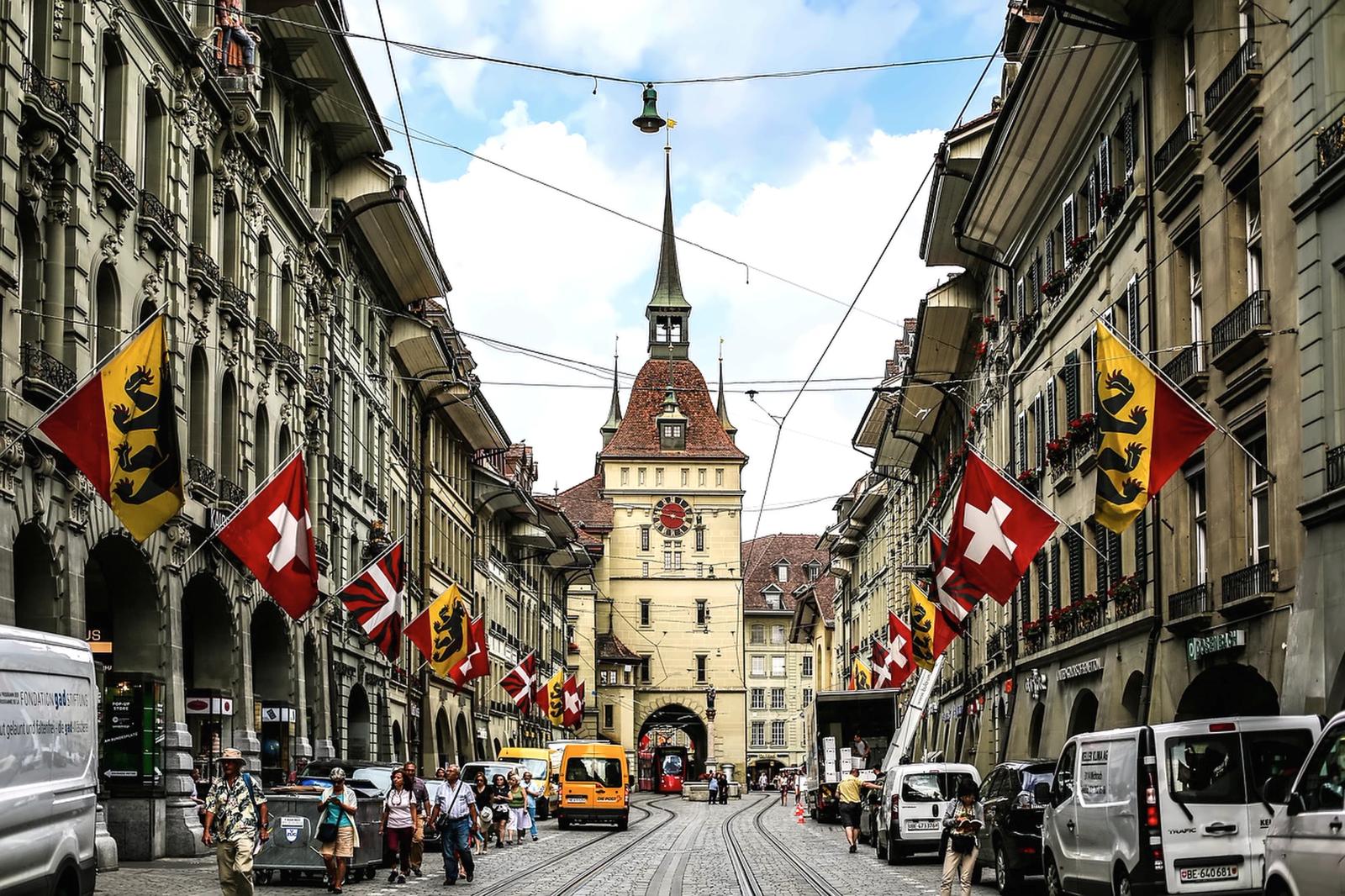
Bern sits at 542 metres above sea level inside a bend of the Aare, and that bend explains half the street plan. The medieval town could only expand westwards, which is why the lanes run in parallel rows. The old town has been on the UNESCO World Heritage list since 1983. At the end of 2025, 146,867 people were registered as residents. Bern is the capital of the canton of Bern and the seat of the Federal Council, parliament and federal administration, making it the country's largest centre of public administration.
History in key dates
The Cronica de Berno gives 1191 as the founding year, under Duke Berthold V of Zähringen. Bern became a free imperial city in 1218 and joined the Swiss Confederation in 1353. The fire of 1405 destroyed much of the wooden town; the rebuild used sandstone, which still defines the look of the place. The Reformation took hold in 1528, and in 1536 Bern conquered Vaud, becoming the largest city state north of the Alps. French troops marched in during 1798 and Bern lost Vaud and Aargau. In 1848 the Federal Assembly chose Bern as the seat of the federal authorities, explicitly not as a capital: the idea was to avoid concentrating power in one place. In 1983 UNESCO added the old town to the World Heritage list, on the grounds that Bern had kept its medieval structure while adapting it to the tasks of a modern seat of government.
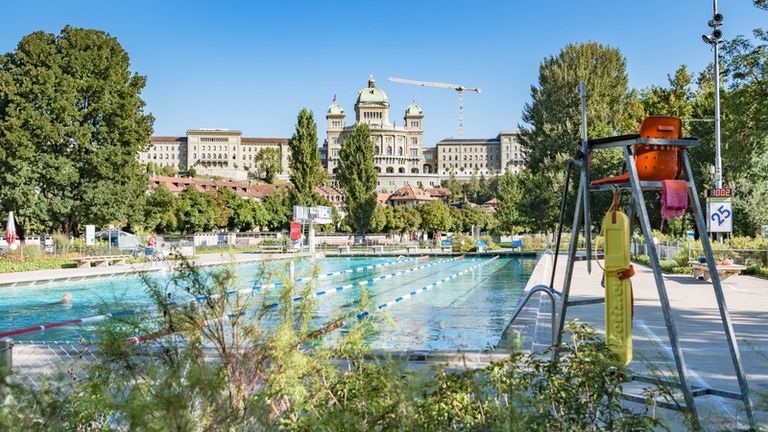
The Federal Palace stands on the southern flank of the old town, with the Bundesterrasse on the far side looking out over the Aare. The first federal parliament building opened in 1857; the present one, designed by Hans Wilhelm Auer, was completed in 1902. The interior can only be seen on a guided tour. Tours are free, last a maximum of 60 minutes and run outside parliamentary sessions from Tuesday to Saturday in German, French, Italian and English. Booking opens three days in advance at the earliest, with 30 places per tour. Anyone over 16 must show official photo ID, followed by a security check with a metal detector. Tours are suspended while parliament is sitting, but you can then follow the debates from the public gallery, with no registration needed for individuals. Details and the booking platform are on parlament.ch.
The old town: arcades, fountains, Zytglogge
The covered arcades along the lanes run for a good six kilometres, making up one of the longest covered shopping streets in Europe. Useful in the rain, a crush on a Saturday morning. The medieval character survives best below the Zytglogge; further west there are few buildings older than 150 years. The city has over a hundred fountains, eleven of them figure fountains from the 16th century, still linked by the Stadtbach both above and below ground. The Zytglogge itself was the western gate of the town wall until 1256 and served as a prison before the fire of 1405. Its astronomical clock and mechanical figures date from 1530. Four minutes before the hour the golden cockerel crows, then the procession of bears turns, the jester rings in the hour too early and Chronos turns the hourglass. The whole thing lasts about a minute, so it pays to be there five minutes early.
The Fountain of Justice stands in the middle of Gerechtigkeitsgasse, a street 260 metres long. Hans Gieng made it in 1543: octagonal, in limestone. Justice wears a blindfold, holds a sword and scales, and at her feet sit a pope, an emperor, a sultan and a mayor. In Reformation-era Bern that was a political statement: law stands above worldly and clerical power. It is the only fountain in Bern to have kept all its original design elements. It has not had a quiet life, though. The scales and sword vanished in 1798 and were only replaced in October 1845, and on 13 October 1986 someone toppled the statue from its plinth, badly damaging it.
The town hall on Rathausplatz was built between 1406 and 1417 in the late Gothic style, under Heinrich von Gengenbach and the Rottweil carpenter Hans Hetzel. It was already in use by 1414. The ground-floor hall served as a market and courtroom, at a time when the town had roughly 5,000 to 6,000 inhabitants. Politically the building still has two tenants: the cantonal parliament of Bern holds four sessions a year here, the cantonal government meets on Wednesdays, and every second Thursday evening the city parliament, 80 members strong, sits in the same chamber. Its sessions are open to the public. When the cantonal parliament is sitting, the Bernese flag flies from the roof. A neo-Gothic remodelling followed from 1865 to 1868, and the present appearance dates from the rebuilding of 1940 to 1942.
Bern today
At the end of 2025, 146,867 people lived in the city, a quarter of them without a Swiss passport. The largest groups come from Germany and Italy. At 51.6 square kilometres the municipality is not big, but it stretches 15 kilometres west to Bümpliz and Oberbottigen. Work here is mostly in services: in 2018 the statistics recorded around 188,250 jobs, with one in eight working people employed by public administration, defence or social insurance. The University of Bern had roughly 18,500 students in the autumn semester of 2019. Politically the city has had a red-green majority without interruption since the municipal elections of 1992, while the surrounding agglomeration votes further right. And Bern is expensive: for years it has been listed alongside Zurich and Geneva among the cities with the highest cost of living worldwide. Full figures are at Statistik Stadt Bern.
Practical information
Bern station sits at the western end of the old town, a few minutes' walk from the Zytglogge. With around 150,000 travellers a day it is the busiest station in Switzerland after Zurich's main station. The fastest trains take 56 minutes to Zurich and the same to Basel. The Bern S-Bahn connects the city to Thun, the Emmental, Biel, Solothurn, Neuchâtel, Fribourg and Schwarzenburg on 13 lines. Within the city, Bernmobil runs five tram lines, three trolleybus lines and fifteen bus lines. Anyone arriving by car should adjust their expectations: the city has decided to introduce a 30 km/h limit on most streets and to remove half of its roughly 17,000 public parking spaces. Parking in the old town lanes is a bad idea in any case. Bern-Belp airport is just under ten kilometres away, but it has had no scheduled flights since 2018.
Frequently asked questions
Is Bern the capital of Switzerland?
Formally, no. Bern is the federal city and performs the function of a capital. In 1848 it was agreed to designate not a capital but simply a seat for the Federal Council, Federal Assembly and federal administration, so as not to concentrate power in one place. The Federal Assembly chose Bern. More at Wikipedia.
Can you visit the inside of the Federal Palace?
Yes, but only on a guided tour. It is free, lasts a maximum of 60 minutes and runs outside parliamentary sessions from Tuesday to Saturday in German, French, Italian and English. Book online, three days in advance at the earliest, 30 places per tour. Visitors aged 16 and over need official photo ID. There are no tours while parliament is sitting, but you can then follow debates from the public gallery, with no registration needed for individuals. Everything is at parlament.ch.
How tall is the minster tower and can you climb it?
The tower is 100.6 metres tall, the highest church tower in Switzerland. The foundation stone of the minster was laid in 1421; work on the tower stopped in 1521 at just under 61 metres and was only finished between 1889 and 1893. 222 steps lead to the first gallery at 46 metres, another 90 to the second gallery at 64 metres, which is also open to the public.
Is there an entrance fee for the Marzilibad?
No. Publicly owned open-air pools in the city of Bern are free of charge with few exceptions, unlike in most other Swiss cities. The Marzilibad lies right on the Aare below the Bundesterrasse.
How long is the train journey from Zurich to Bern?
The fastest direct services take 56 minutes for the 96 kilometres, with trains every half hour during the day. Basel SBB also takes 56 minutes. The current SBB timetable is always the authoritative source.
When is the Zibelemärit held?
Every year on the fourth Monday in November. The goods on sale are mainly onions, around 30 tonnes across more than 600 stalls. Many visitors arrive early in the morning. Confetti and small plastic hammers are part of it: the Zibelemärit is the city's largest market and one of the oldest annual fairs in Switzerland.
When do the Zytglogge figures move?
Four minutes before every full hour. The golden cockerel crows first, then the procession of bears turns, the jester deliberately rings in the hour too early, Chronos turns the hourglass, and the cockerel crows again at the end. The mechanism dates from 1530, as does the astronomical clock. The whole thing lasts about a minute, so be there five minutes early.