Lucerne sits where the Reuss river leaves Lake Lucerne, between the mountains Pilatus and Rigi. The city counts 86,234 residents (December 2024), and around 245,000 across the wider agglomeration. Visitors find an old town with covered wooden bridges, but also a proper lake beach, a weekly market set up right along the Reuss, and a concert hall built of glass and steel. This piece covers what there is to do, what it costs, and when it's open.
A short history
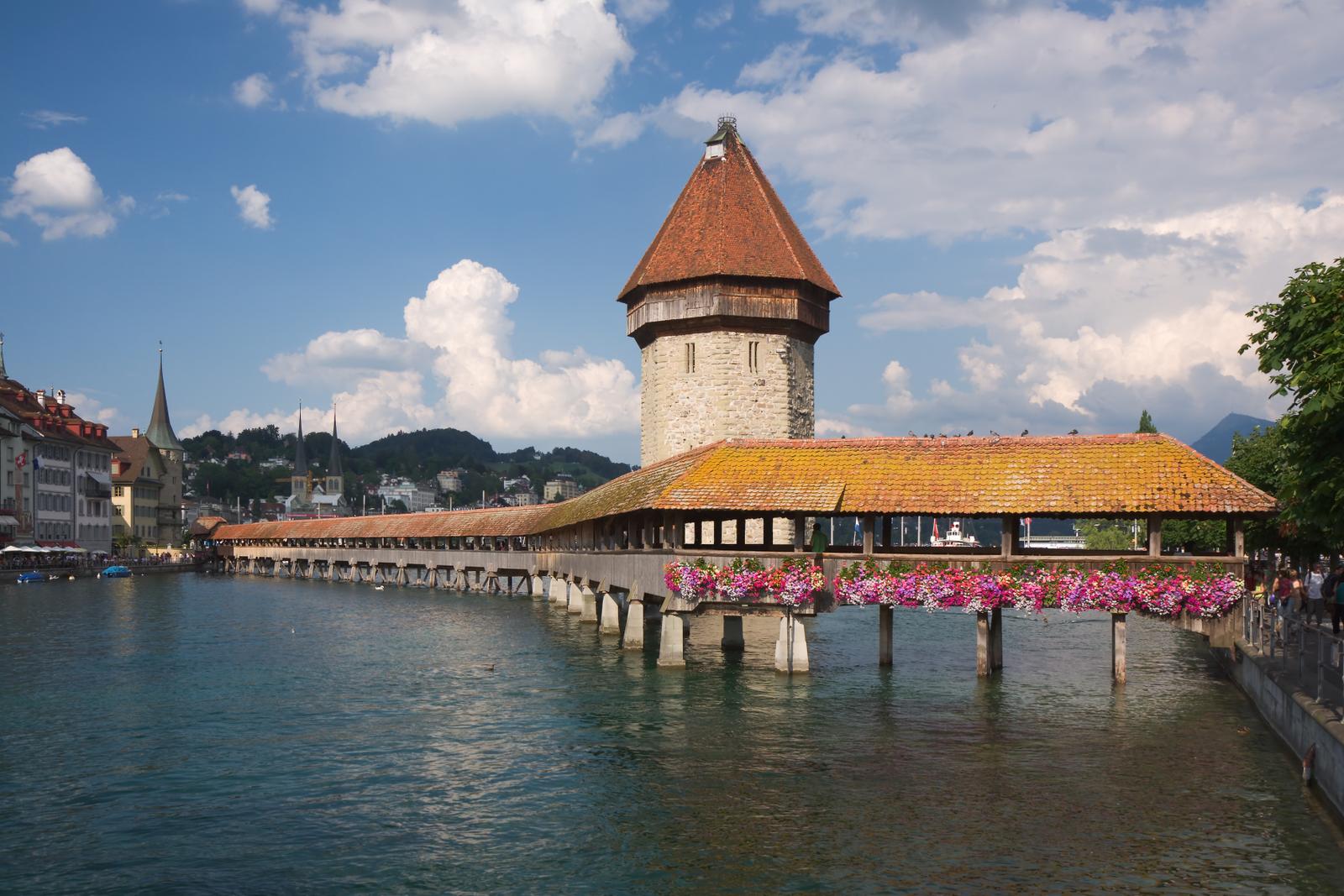
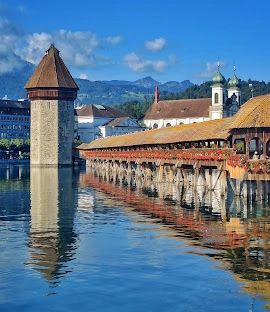
The exact founding year is unknown; it falls somewhere between 1180 and 1200. In 1291, German king Rudolf I of Habsburg bought the lordship rights over Lucerne, and in 1332 the city allied itself with Uri, Schwyz and Unterwalden. In 1415, Lucerne gained imperial immediacy and stayed a free imperial city until 1648. The Chapel Bridge, at 202 metres Europe's second-longest covered wooden bridge, dates from 1365 and links the old town to the new town across the Reuss. A fire in 1993 destroyed much of it, and it was rebuilt true to the original. On 17 June 2007, Lucerne and neighbouring Littau voted to merge, a fusion completed at the end of 2009. Lucerne carnival, which opens on Schmutziger Donnerstag, remains central Switzerland's biggest annual event.
Getting there and around
Lucerne station is the hub for long-distance, regional and S-Bahn Luzern services; SBB, Zentralbahn, SOB and BLS all run trains through it. Four stations sit within city limits: Luzern, Luzern Verkehrshaus, Luzern Littau, and the underground Luzern Allmend-Messe. Around town, trolleybuses and buses run by Verkehrsbetriebe Luzern (vbl) cover the network. On the lake, the Lake Lucerne Navigation Company (SGV) operates five paddle steamers, the largest active fleet of its kind anywhere; the Bahnhofquai landing stage sits directly across from the station. Drivers cross the city on the A2 motorway, which runs under the Reuss in a tunnel, with exits Emmen-Süd, Luzern-Zentrum, Luzern-Kriens and Luzern-Horw from north to south.
Swimming in Lake Lucerne
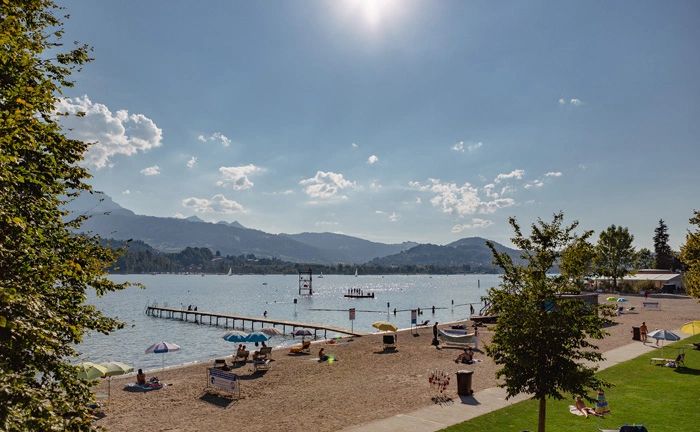
The Lido lake pool, at Lidostrasse 6A, runs right along the water with a 300-metre sand beach and a matching stretch of lawn. Built in 1929 to designs by Arnold Berger, it was rebuilt in the late 1990s by architects Max Bosshard and Christoph Luchsinger. Besides the lake, there's a heated pool and a children's playground; entry costs up to 10.00 CHF for adults and is free for children under 6 years of age. Buses 6, 8 and 24 reach the Lido at the Verkehrshaus-Würzenbach stop. For something more central, swim at the Ufschötti next to the transport museum, or at Seebad Luzern. Rotsee, the city's lowest point at 419 metres above sea level, offers a quieter swimming spot. Every summer, open-water swimmers race in the Seeüberquerung Luzern, the lake crossing that starts at the Lido.
Mountains on the doorstep
Two neighbouring mountains shape the view from the city. Pilatus can be climbed from the Alpnach side on the world's steepest cogwheel railway, or from Lucerne by panoramic gondola and aerial cableway. Rigi, nicknamed the 'Queen of the Mountains', has Europe's first mountain railway. Within the city itself, two hills serve as lookout points: Dietschiberg to the northeast and Gütsch to the west, both designated local recreation areas. The historic Gütschbahn funicular climbs to Château Gütsch, a hotel built in 1888 in the historicist style.
Sport: football, rowing, running
FC Luzern has played at the Swissporarena since 2011 and competes in the Super League, Switzerland's top football division; the women's team also plays at the top level. On Rotsee, prized for its lack of wind and rated one of the world's best rowing courses, the Ruderwelt Luzern regatta runs each year in early July as part of the World Rowing Cup. The SwissCityMarathon Lucerne ranks as Switzerland's third-largest marathon, and the Luzerner Stadtlauf run passes through the old and new town every year. In handball, HC Kriens-Luzern plays in the QHL, Switzerland's top league.
Culture and museums
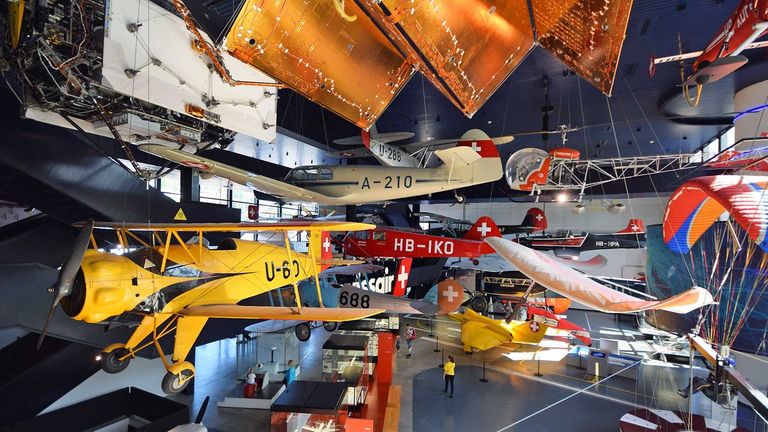
The Culture and Convention Centre Lucerne (KKL), built in 1999 on the lakefront by French architect Jean Nouvel, is home to the Lucerne Symphony Orchestra and the main stage of the Lucerne Festival. The Swiss Museum of Transport shows locomotives, cars, ships and aircraft, and is the most-visited museum in Switzerland; it also houses the country's only IMAX cinema and only large planetarium. The Sammlung Rosengart collection holds works by Pablo Picasso and Paul Klee. The Bourbaki Panorama occupies a purpose-built round hall for Edouard Castres's 112-by-10-metre panoramic painting from 1881. For theatre, there's the Luzerner Theater, the Kleintheater Luzern, and the Theaterpavillon.
Nightlife beyond the old town
For alternative culture, there's Neubad, which grew out of a temporary reuse of a former indoor pool. In the former Sedel prison, the Musikzentrum Sedel has run punk and rock shows since 1981. A younger crowd heads to Treibhaus, while Konzerthaus Schüür and the Jazzkantine, where music-college students mostly perform, hold regular concerts.
Weekly market and flea market
On Tuesday and Saturday mornings, market stalls line both banks of the Reuss: at Rathausquai and Unter der Egg on the right bank, on Jesuitenplatz on the left. What's on offer comes mostly from small regional producers: vegetables, cheese, baked goods, fish, flowers. Unter der Egg also runs a fish market on Tuesdays, Fridays and Saturdays, with fresh freshwater fish from Lake Lucerne. From May to October, a flea market sets up on Saturdays at Vögeligärtli. During construction on the new Bahnhofstrasse, from October 2024 to December 2026, no extra market stalls are allowed there.
Out and about with kids
The Lido has a large playground and a children's pool; in summer it runs intensive swimming courses for kids from age four. Right next door is the transport museum, with its planetarium and the walk-on aerial map Livemap Switzerland. Near the Lion Monument, a few minutes' walk from the old town, the Gletschergarten brings the ice age of 20,000 years ago and a subtropical climate from 20 million years ago to life.
The Lido has a large playground and a children's pool; in summer it runs intensive swimming courses for kids from age four. Right next door is the transport museum, with its planetarium and the walk-on aerial map Livemap Switzerland. Near the Lion Monument, a few minutes' walk from the old town, the Gletschergarten brings the ice age of 20,000 years ago and a subtropical climate from 20 million years ago to life.
What changes through the year
Between Schmutziger Donnerstag and Güdisdienstag, the city centre belongs to Lucerne carnival; in 2026, Güdisdienstag falls on 17 February. In summer, the lake basin becomes the stage for the Lucerne Festival, with international symphony orchestras performing at the KKL. Autumn brings the Lucerne autumn fair, known locally as the Määs. Every other year in summer, the Lido meadow in front of the transport museum hosts the free open-air concert Funk am See.
Frequently asked questions
When is the weekly market in Lucerne?
Tuesday and Saturday mornings, on both banks of the Reuss at Rathausquai, Unter der Egg and Jesuitenplatz. More details from the IG Luzerner Wochenmarkt.
Where can you swim in the lake in Lucerne?
At the Lido pool, at the Ufschötti next to the transport museum, at Seebad Luzern, or, more quietly, at the Rotsee bathing spot.
How much does entry to the Lido cost?
Entry costs up to 10.00 CHF for adults and is free for children under 6 years of age. Details at lido-luzern.ch.
When is Lucerne carnival in 2026?
It runs from Schmutziger Donnerstag through Güdisdienstag, 17 February 2026.
Does FC Luzern play in the top division?
Yes, FC Luzern has played at the Swissporarena since 2011 and competes in the Super League, Switzerland's top football division.
What's the best way to reach Lucerne's old town?
Lucerne station sits a few minutes' walk from the old town and is served by SBB, Zentralbahn, SOB and BLS; buses and trolleybuses run by Verkehrsbetriebe Luzern (vbl) cover the city.